
How Shockwave Therapy Can Help You Beat Tennis Elbow — And Get Back to the Sports You Love

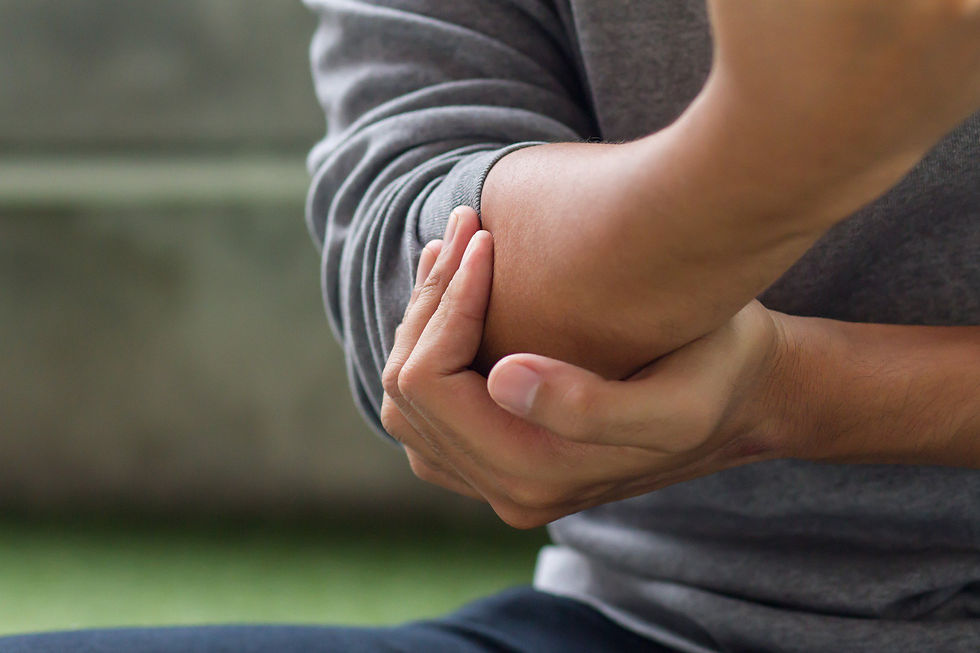
If you live in South Orange County, chances are you’re staying active year-round. Whether you're playing tennis in Mission Viejo, pickleball in San Clemente, golfing in Coto de Caza, or surfing at Trestles, your elbows take more stress than you might realize.
When pain develops on the outside of your elbow and won’t go away, you may be dealing with Lateral epicondylitis, commonly known as tennis elbow.
The good news? You don’t have to sit out your favorite activities for months — and you don’t have to jump straight to injections or surgery.
Let’s break down how shockwave therapy works and how a multi-therapy recovery approach at PEAK Recovery can help you heal faster and stay active.
What Is Tennis Elbow (And Why It Won’t Just “Rest Away”)?
Tennis elbow is an overuse tendon injury affecting the extensor tendons that attach to the outside of your elbow. It’s common in:
Tennis players
Pickleball players
Golfers
Surfers
Weightlifters
Desk workers
It starts with microscopic tendon damage from repetitive gripping and wrist extension. Over time, the tendon degenerates, blood flow decreases, and the body struggles to fully heal the area.
That’s why:
Rest only helps temporarily
Ice reduces pain but doesn’t rebuild tissue
Braces mask symptoms
Cortisone may calm pain short-term but doesn’t repair the tendon
If you want lasting results, you need to stimulate real tissue regeneration.
How Shockwave Therapy Helps Heal Tennis Elbow
Shockwave therapy (Extracorporeal Shockwave Therapy or ESWT) uses high-energy acoustic waves to stimulate healing in damaged tendon tissue.
The Mechanism of Action
When applied to the injured area, shockwave therapy:
1. Stimulates Blood Flow (Neovascularization)
Tendons have poor blood supply. Shockwave creates microtrauma that signals your body to build new blood vessels — improving oxygen and nutrient delivery.
2. Activates Cellular Repair
Shockwaves stimulate fibroblasts (tendon-repair cells), increasing collagen production and promoting healthier tendon remodeling.
3. Breaks Up Degenerative Tissue
Chronic tennis elbow involves disorganized, scarred tissue. Shockwave helps disrupt this dysfunctional tissue and restart the healing cascade.
4. Reduces Pain Signals
Shockwave therapy decreases substance P (a pain mediator) and desensitizes irritated nerve endings.

Why Active Adults Love Shockwave Therapy
Non-surgical
No injections
Minimal downtime
Treatments take about 10–15 minutes
Most people continue playing sports during care
Often effective when other treatments have failed
For busy adults in South OC, that means less time sidelined and more time playing.
Why a Multi-Therapy Approach Works Even Better
At PEAK Recovery, shockwave therapy is often combined with other advanced recovery modalities to speed healing and reduce inflammation systemically.
Here’s how each therapy supports tennis elbow recovery:
Red Light Therapy: Accelerating Cellular Energy
High-powered red and near-infrared light:
Boosts mitochondrial ATP production
Reduces inflammation
Enhances tissue repair
Improves circulation
This creates a powerful synergistic effect when paired with shockwave — especially for stubborn chronic cases.
Mild Hyperbaric Oxygen Therapy (HBOT)
Tendon injuries heal slowly because oxygen delivery is limited.
HBOT:
Increases oxygen saturation in plasma
Enhances collagen synthesis
Supports tissue regeneration
Reduces inflammatory load
For active adults who want faster healing between matches, this can be a game-changer.
High Power PEMF
Pulsed electromagnetic field therapy helps:
Improve cellular communication
Reduce pain
Enhance microcirculation
Support tissue repair
It complements shockwave by promoting ongoing cellular recovery between sessions.
Cold Plunge Therapy
Perfect after a long match or surf session:
Reduces acute inflammation
Decreases pain sensitivity
Supports recovery
Improves circulation after rewarming
It’s especially useful in early-stage or flare-up situations.
Sports Chiropractic & Movement Optimization
Many tennis elbow cases are not just an elbow problem.
They stem from:
Shoulder mobility restrictions
Poor scapular mechanics
Wrist dysfunction
Thoracic spine stiffness
Correcting biomechanics reduces tendon overload and prevents recurrence.
What Recovery Looks Like
Most patients experience:
Noticeable improvement within 3–5 treatments
Reduced pain during gripping and play
Improved strength
Better tolerance to backhands, serves, and paddling
Because the goal isn’t just pain relief — it’s true tissue remodeling and performance restoration.
Don’t Let Tennis Elbow Sideline You

Living in South Orange County means year-round activity. You shouldn’t have to give up:
Early morning pickleball matches
Weekend golf rounds
After-work tennis
Surf sessions at Trestles
Tennis elbow is treatable — and often without surgery or injections.
If you’re ready to get back to playing pain-free, a regenerative, multi-therapy approach may be exactly what your elbow needs.


Comments