
The PEAK Recovery Approach to: Tennis Elbow & Golfer's Elbow

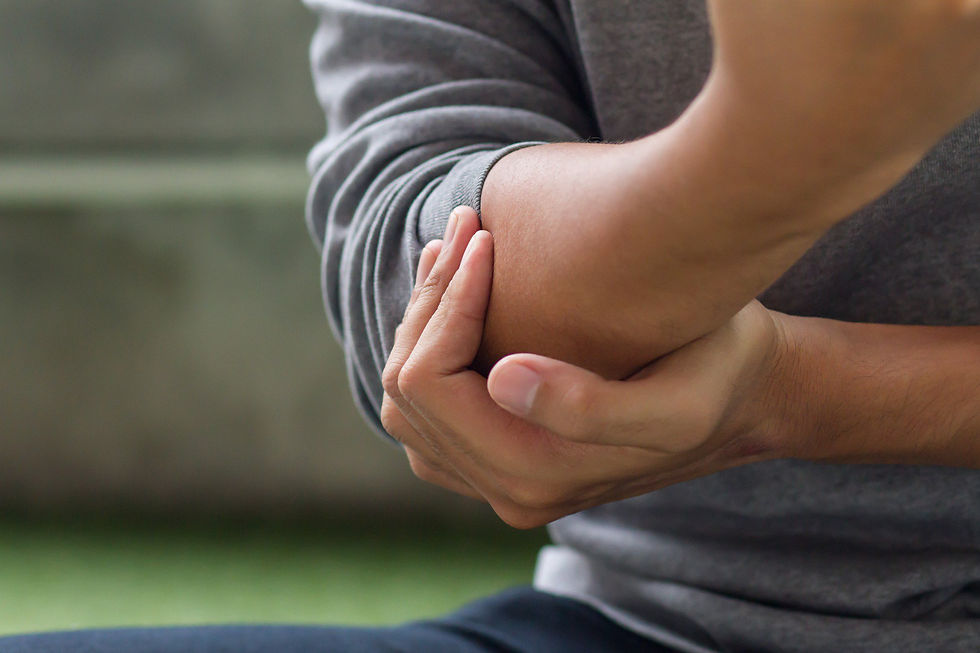
5 Therapies to Help Stubborn Elbow Pain (Tennis Elbow / Golfers Elbow) and Get You Back in the Game
Whether you're swinging a golf club, hitting a tennis ball, playing pickleball, or simply gripping a coffee mug, elbow pain can make everyday activities frustrating.
Tennis elbow and golfer's elbow are two common injuries involving the tendons that attach your forearm muscles to your elbow.
Tennis elbow causes pain on the outside of the elbow.
Golfer's elbow causes pain on the inside of the elbow.
Despite their names, you don't have to play either sport to develop these conditions. Repetitive gripping, lifting, swinging, and even computer work can contribute.
The frustrating part? These tendon injuries can linger for months because repetitive strain often outpaces the body's ability to repair damaged tissue.
At PEAK Recovery, we offer several therapies designed to address different aspects of tendon recovery. Here's our ranking of five options, starting with our favorite.
#1. Focused Shockwave Therapy
Best for: Targeting stubborn tendon pain and stimulating tissue repair
Focused Shockwave Therapy uses powerful acoustic waves to stimulate the body's natural healing response in damaged tendons.
These waves help stimulate circulation, encourage tissue repair, and reduce persistent pain. This makes shockwave particularly interesting for chronic elbow injuries that haven't responded to rest or traditional treatment.
At PEAK, we have both focused and radial shockwave technologies, allowing us to target the injured tendon and surrounding tissues.
Research shows promising results for shockwave therapy in chronic tennis elbow especially when as part of antire treatment protocol.

Minimum: 3 treatments
Recommended: 6–10 treatments
Frequency: 1–2x per week
#2. High Power PEMF / EMTT
Best for: Supporting circulation, reducing discomfort, and encouraging recovery
High Power PEMF and EMTT use powerful magnetic pulses to stimulate tissues without placing additional stress on a painful tendon.
These electromagnetic pulses may influence cellular activity and the body's inflammatory response, potentially helping damaged tissues recover.
We especially like combining EMTT with Focused Shockwave Therapy. Shockwave provides a targeted mechanical stimulus, while EMTT offers another way to stimulate the injured area without additional physical pressure.
This combination is promising, although research specifically demonstrating added benefits for elbow tendinopathy is still limited.
Minimum trial: 4–6 treatments
Suggested course: 8–12 treatments
Frequency: 2–3 times per week
#3. Hyperbaric Oxygen Therapy (HBOT)
Best for: Providing additional oxygen to support tissue recovery
Tendons generally have a limited blood supply compared with muscles, which is one reason tendon injuries can be slow to heal.
Hyperbaric Oxygen Therapy increases the amount of oxygen dissolved in the blood by breathing oxygen in a pressurized environment.
Oxygen plays an important role in tissue repair and collagen production. Collagen is the protein that gives tendons their strength and structure.
We like the potential of pairing HBOT with shockwave and EMTT: shockwave stimulates a healing response, EMTT provides an additional tissue stimulus, as well as improves deep circulation and HBOT makes sure the blood that is circulating is rich in oxygen.

Minimum trial: 3-5 treatments
Suggested course: 10–15 treatments
Frequency: 2–3 times per week
#4. Whole Body Red Light Therapy
Best for: Reducing discomfort and supporting cellular recovery
Red and near-infrared light may help cells produce energy more efficiently and regulate inflammation.
Research on targeted light and laser therapy has shown encouraging results for some patients with tennis elbow, including improvements in pain and grip strength.
At PEAK Recovery, our whole-body red light bed delivers five different wavelengths in a comfortable 15-minute session, treating both sides of the body simultaneously.
We especially like red light as a convenient addition to other therapies because it requires no physical stress on the injured elbow.
Research on targeted laser therapy is more established than research specifically involving whole-body red light beds for elbow injuries.

Minimum trial: 6 treatments
Suggested course: 12–15 treatments
Frequency: 3-5 times per week
#5. Sports Chiropractic Care
Best for: Addressing the underlying cause and preventing recurring elbow pain
Sometimes elbow pain isn't just about the elbow.
Poor shoulder mobility, tight forearm muscles, limited wrist movement, and repetitive gripping mechanics can all increase stress on the tendons.
Sports chiropractic care can help identify movement restrictions and mechanical problems that may be contributing to your injury.
At PEAK, we combine hands-on treatment with stretching, progressive strengthening, and movement recommendations to help patients recover and reduce the chance of reinjury.
Building tendon strength and gradually returning to activity are especially important for lasting results.
Minimum: 2–3 visits
Recommended: 4–6 visits with home exercises
Frequency: 1–2 times per week initially
What's the Best Combination?
For someone struggling with chronic tennis elbow or golfer's elbow, our favorite starting point is Focused Shockwave Therapy combined with High Power PEMF/EMTT.
For those looking for additional recovery support, we suggest considering HBOT and Whole Body Red Light Therapy.
Sports chiropractic care can help address the movement and mechanical issues that may have contributed to the injury in the first place.
The good news? You don't have to do everything on this list.
Our goal is to choose the therapies that make the most sense for your injury, your activity level, and your recovery goals.
Ready to Get Back in the Game?
Whether you're a golfer, tennis player, pickleball enthusiast, surfer, or simply tired of elbow pain interfering with everyday life, PEAK Recovery can help you explore your treatment options.
Don't let stubborn elbow pain keep you on the sidelines.
PEAK Recovery | San Clemente
Healing • Performance • Longevity
Instagram: @PeakRecoverySC
Treatment counts are suggested starting points, not guarantees of results. Clinical evidence varies among these therapies, and several suggested schedules are based on practical treatment approaches rather than established elbow-specific research. Individual recommendations depend on your diagnosis, injury severity, and response to treatment.


Comments